

BLACK WALL STREET 2.0: HBCU Business Scholars Predict the Next Era of Leadership Amid War, Tariffs, and AI Disruption
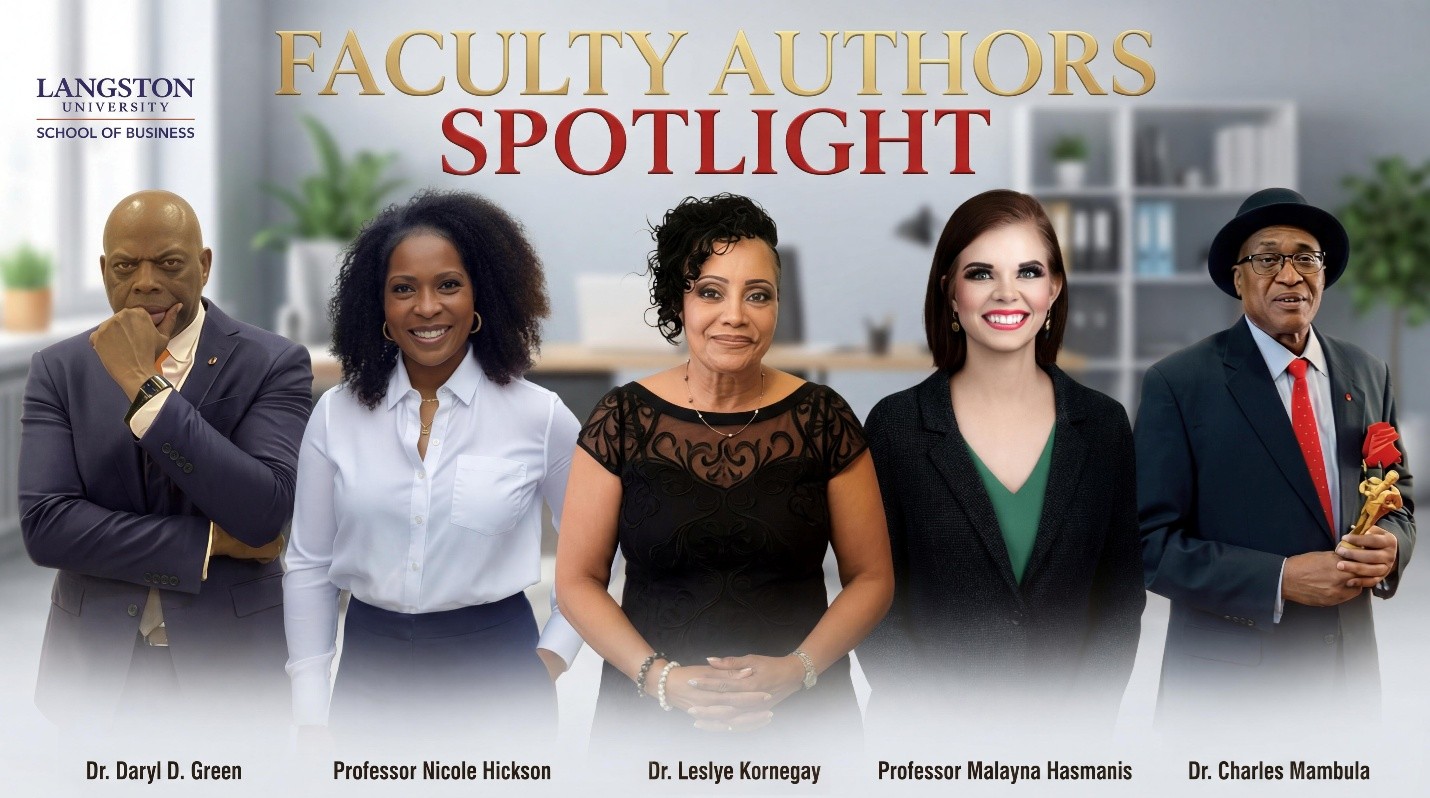
Led by Dean Dr. Daryl D. Green, LUSB has convened a group of 20+ practitioner-scholars and business experts from across the country—a network reflecting the school’s distinctive approach: most faculty are active practitioners who teach while building companies, advising organizations, and working in real-world markets.
Located in Langston, Oklahoma, one of Oklahoma’s 13 historic Black towns, LUSB frames its Black History Month message not as a ceremony, but as a strategy: applying the legacy of Black enterprise to modern volatility.
“If you’re running a business in 2026, you can’t treat volatility like a surprise anymore. Wars affect fuel. Tariffs affect pricing. AI affects staffing. That’s not theory. That’s operations. Leaders have to build systems that absorb shock instead of reacting emotionally every quarter,” Disruption is no longer episodic—it’s structural,” said Dr. Green, Dean of the Langston University School of Business and former senior executive leader with the U.S. Department of Energy. LUSB has earned national recognition for entrepreneurship and business outcomes, including recognition for entrepreneurship excellence and achieving a Top 1% national performance on the Peregrine Business Exam in 2025.
2026 PREDICTIONS FROM LANGSTON UNIVERSITY SCHOOL OF BUSINESS EXPERTS
1) Leadership Advantage Will Shift to “Disruption Managers.”
Dr. Daryl D. Green, Dean, Langston University School of Business; nationally quoted strategist; former U.S. Department of Energy senior manager
Prediction: In 2026, effective leadership will be defined by the ability to manage continuous disruption, war-driven volatility, tariff-driven price shifts, and AI-driven acceleration without sacrificing trust or integrity. “Disruption is permanent. The difference comes down to discipline. You decide what matters, you communicate it clearly, and you execute without cutting ethical corners, especially when the pressure rises.”
2) Tariffs and Geopolitical Fragmentation Will Reshape Entrepreneurship.
Dr. Charles J. Mambula I, Director of Entrepreneurship Studies & Research, Langston University; international trade and entrepreneurship scholar-practitioner; global economic development consultant
Prediction: As tariffs and trade barriers expand, entrepreneurs, especially those operating with thin margins, will need new playbooks for sourcing, pricing, and partnerships. Regionalization will accelerate, and trade literacy will become a core skill in entrepreneurship. “We are not witnessing a temporary disruption. We are witnessing a realignment of trade relationships and supply chains. Entrepreneurs must build resilience through strategic partnerships, regional sourcing options, and pricing agility.”
3) AI Will Expose Judgment Gaps Faster Than It Eliminates Jobs.
Professor Nicole B. Hickson, MSM, PHR, Business Professor, Langston University; published financial literacy expert; creator of the E.A.S.E. Financial Empowerment Framework.
Prediction: AI will accelerate decisions across the workforce. The biggest organizational risk will be faster, higher-impact decisions made without financial, ethical, or operational understanding.
“AI will not eliminate most jobs. It will expose gaps in skill and judgment. Organizations will learn quickly that speed without understanding creates risk.”
4) Financial Trauma Will Quietly Drive Capital Mistakes and Culture Breakdowns.
Professor D. Cherrelle Cohens, MBA, Adjunct Professor of Business & Accounting, Langston University; CFO consulting strategist; Founder, FinTraum
Prediction: In 2026, organizations will increasingly discover that leadership breakdowns are often rooted in unaddressed financial trauma—fear-based decision patterns shaped by history, volatility, and personal experience. "As anti-DEI narratives intensify, the bigger risk is not diversity initiatives. It’s unresolved financial trauma driving leadership decisions. Trust and sustainability will depend on leaders who can recognize fear-based financial behavior before it undermines long-term value.”
5) Higher Education Will Be Forced to Deliver Economic Resilience, Not Just Credentials.
Dr. Leslye Renee Kornegay, Executive Director at Duke University; faculty member at Langston University; author and nationally respected voice in cultural intelligence and leadership resilience
Prediction: Learners will demand faster, portable, applied pathways that blend AI literacy, entrepreneurship, cultural intelligence, and leadership development—designed for economic resilience, not just employment. “The question is no longer whether change is coming. The question is whether institutions are building leaders capable of applying learning in real time—across sectors, roles, and uncertainty.”
6) Nonprofits and Community Enterprises Will Shift to Outcome-Linked, Tech-Enabled Capital.
Professor Malayna Hasmanis, Nonprofit infrastructure strategist; community systems designer; faculty member
By 2026, nonprofits and mission-driven enterprises will adopt participatory, tech-enabled governance models that tie funding to measurable outcomes. “Organizations that operationalize stakeholder governance and outcome-linked revenue, including AI-informed forecasting and blended finance, will convert trust into sustainable capital,” Hasmanis predicts increased use of community data platforms, impact-linked funding contracts, and cross-sector partnerships that prioritize transparency and measurable impact.
Why This Perspective Is Distinct During Black History Month
Langston University is Oklahoma’s only public HBCU and is located in a historic Black town founded on self-determination and cooperative enterprise. Few business schools can present a concentrated group of practitioner faculty—many of whom are active consultants, executives, strategists, and entrepreneurs- forecasting global economic trends during Black History Month.
“Our faculty do not speak from theory alone,” Dr. Green said. “They operate in markets, advise organizations, negotiate trade, and build systems. That practitioner edge gives us unusual clarity in volatile times.”
For media inquiries or to schedule interviews with featured faculty or Dean Dr. Daryl D. Green, please get in touch with the
Langston University Public Relations Office
Phone: (405) 466-6049
Email: emelero@langston.edu
ABOUT LANGSTON UNIVERSITY SCHOOL OF BUSINESS:
Langston University, located in Langston, Oklahoma, is the state’s only historically Black college and home to a nationally accredited School of Business. LUSB has earned national recognition:
• 2023: Ranked among the Best HBCU Programs in Entrepreneurship by BestColleges.com.
• 2024: Named one of the Top 40 HBCU Business Schools in the nation (39 out of 89).
• 2025: Celebrated as a Top 1% performer nationally on the Peregrine business exam, with graduating seniors surpassing both PWIs and HBCUs in 13 core business areas.
The School of Business is committed to building future leaders through innovative programs, community partnerships, and student-centered learning that drives economic development.
#LangstonStrong #AlumniEngagement #HBCUImpact #LUSB #LegacyToLeadership #LangstonUniversity #AlumniPower #TransformingLeadership #LionPride #HBCULegacy
Ellie Melero
Langston University School of Business
email us here
Visit us on social media:
LinkedIn
Facebook
Legal Disclaimer:
EIN Presswire provides this news content "as is" without warranty of any kind. We do not accept any responsibility or liability for the accuracy, content, images, videos, licenses, completeness, legality, or reliability of the information contained in this article. If you have any complaints or copyright issues related to this article, kindly contact the author above.
